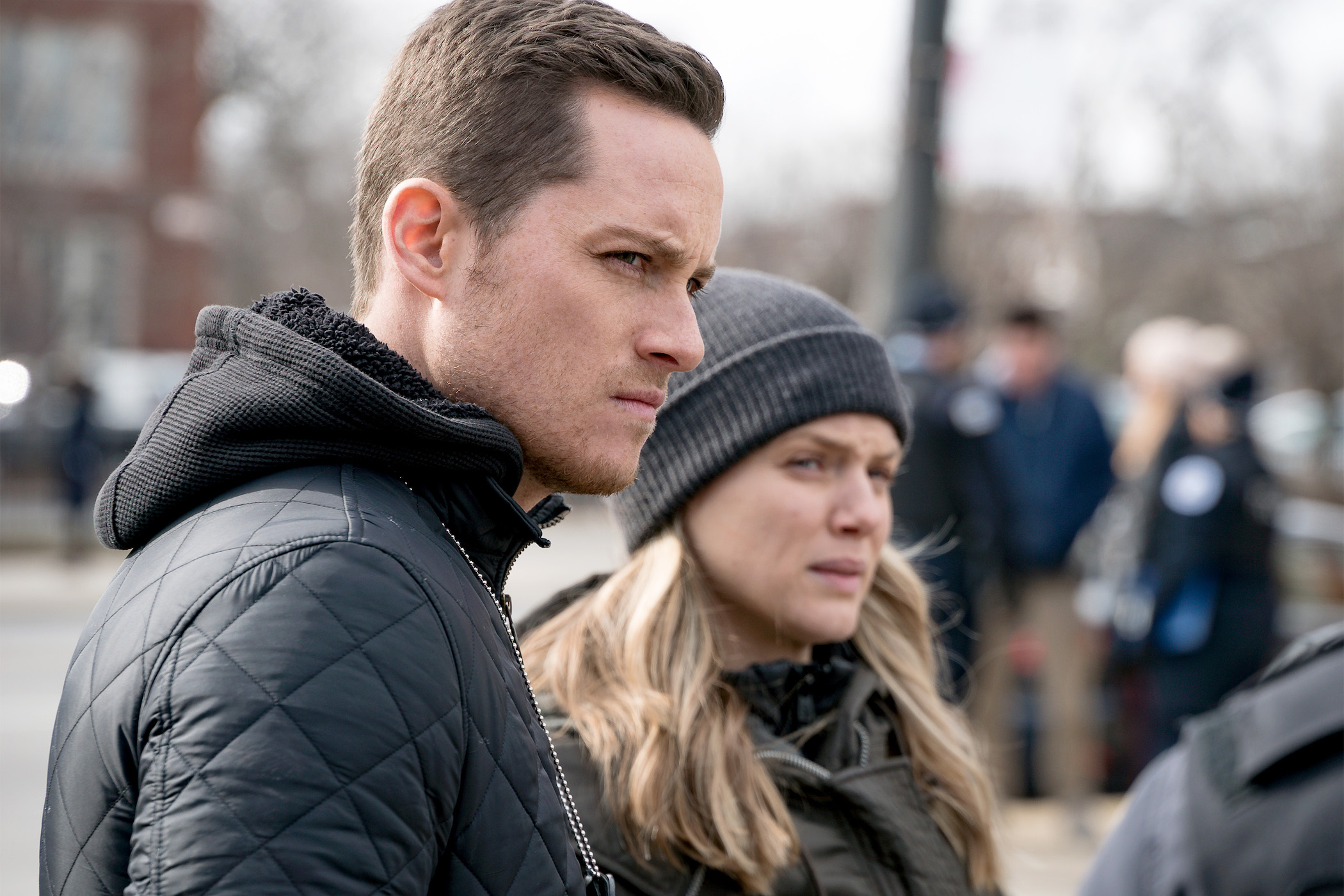
From partners on the job to one of Chicago P.D.’s most talked-about couples, Jay Halstead and Hailey Upton built a relationship shaped by trust, tension, and shared trauma. Their emotional journey is more than just romance—it reflects two deeply driven officers learning how love can both heal and complicate their lives. As their bond grows through danger, loyalty, and difficult choices, both characters are pushed to evolve in powerful ways, making their storyline one of the most compelling and emotionally layered arcs in the series.
From partners on the job to one of the most talked-about couples in Chicago P.D., the relationship between Jay Halstead and Hailey Upton grew into one of the series’ most emotionally complex storylines. What began as a professional partnership slowly evolved into something far deeper, shaped by trust, shared danger, and the emotional weight of their work in the Intelligence Unit.
From the moment Upton joined the team, there was a natural chemistry between the two officers. Both were highly skilled investigators with strong instincts and an unwavering commitment to justice. Their ability to read each other in high-pressure situations quickly made them one of the most effective partnerships in the unit. Whether pursuing dangerous suspects or navigating tense interrogations, Halstead and Upton developed a rhythm built on mutual respect and trust.
But their connection was never purely professional.
Over time, the long hours, life-or-death situations, and emotionally draining cases they faced together created a bond that went beyond the typical partnership between detectives. They understood each other in ways that few others could, largely because they shared the same burdens of the job. Working under the intense leadership of Hank Voight meant constantly operating in morally complicated territory, where the line between right and wrong often blurred.
For both Halstead and Upton, those experiences left emotional scars.
Halstead, a former soldier, carried the weight of his past military service and the psychological toll it had taken on him. He struggled at times with anger, trauma, and the pressure to live up to his own moral standards. Upton, meanwhile, had her own complicated history, shaped by a difficult upbringing and a deep desire to prove herself as both a detective and a person.
Because of these shared struggles, they often found comfort in each other.
Their relationship slowly transitioned from quiet understanding to emotional vulnerability. Moments that began as simple conversations after difficult cases gradually revealed deeper feelings. Instead of avoiding those emotions, the show allowed them to unfold naturally over time.
That slow build made their relationship feel authentic.
Rather than rushing into romance, Halstead and Upton spent years developing trust. Viewers watched them support each other through dangerous investigations, personal crises, and moments when their moral compass was tested. Each challenge strengthened their bond while also revealing how complicated love could become for two people working in such a high-risk environment.
One of the most defining aspects of their relationship was how it forced both characters to grow.
Halstead often tried to hold onto his sense of idealism, believing in rules and accountability even when the world around him felt chaotic. Upton, on the other hand, sometimes leaned toward a more pragmatic approach, influenced by the realities of police work and the difficult decisions demanded by their job.
These differences created tension.
At times, their perspectives clashed, particularly when confronting the controversial methods used by their unit. Yet those disagreements also deepened their connection because they forced both characters to examine their beliefs and motivations more closely.
Their relationship became a mirror reflecting their internal struggles.
For Upton, being with Halstead meant confronting the emotional walls she had built to protect herself. His compassion and loyalty challenged her to open up in ways she rarely allowed herself to do. For Halstead, loving Upton required him to accept that not everything in life could be neatly defined as right or wrong.
The emotional stakes increased as their partnership continued to face new dangers.
Undercover operations, violent confrontations, and morally complicated cases pushed them to their limits. Each new crisis tested their ability to separate their professional responsibilities from their personal feelings.
Despite those challenges, their connection remained strong.
What made Halstead and Upton’s story so compelling was the sense that they truly understood one another. In a world filled with chaos and danger, they became each other’s safe place—a rare source of stability in an otherwise unpredictable life.
Their relationship also resonated deeply with fans of Chicago P.D. because it reflected the reality of two people trying to balance love with the intense demands of their careers.
Police work in the Intelligence Unit is not just a job; it is a constant emotional battle. Officers are forced to confront violence, injustice, and tragedy on a daily basis. Maintaining personal relationships under those circumstances can be incredibly difficult.
Halstead and Upton’s journey showed how love could both heal and complicate those struggles.
At times, their bond helped them cope with trauma and find strength when they needed it most. At other moments, their feelings made situations even more difficult, especially when professional decisions carried personal consequences.
That complexity is what made their storyline stand out.
Rather than presenting a simple romance, the show portrayed a layered relationship shaped by loyalty, fear, hope, and sacrifice. Both characters were forced to grow not only as officers but also as individuals learning how to trust someone with their deepest vulnerabilities.
As their story continued to evolve, Halstead and Upton became more than just partners or lovers.
They became two people navigating the complicated intersection between duty and emotion, constantly learning how to support one another while facing the unpredictable realities of life in Chicago’s Intelligence Unit.
In the end, their journey stands as one of the most emotionally rich arcs in Chicago P.D.—a story about trust, resilience, and the complicated ways love can grow in even the most dangerous circumstances.